Posts Tagged ‘Cloud’

“It’s the API, stupid!”

Monday, April 15th, 2013

In a recent discussion about “the cloud”, someone told me that he felt the topic was vastly overrated, and that what amounted to time-shared access to mainframes really was a revival of forty year-old concepts. The key thing that struck me about this was how completely it missed the point of a cloud architecture.
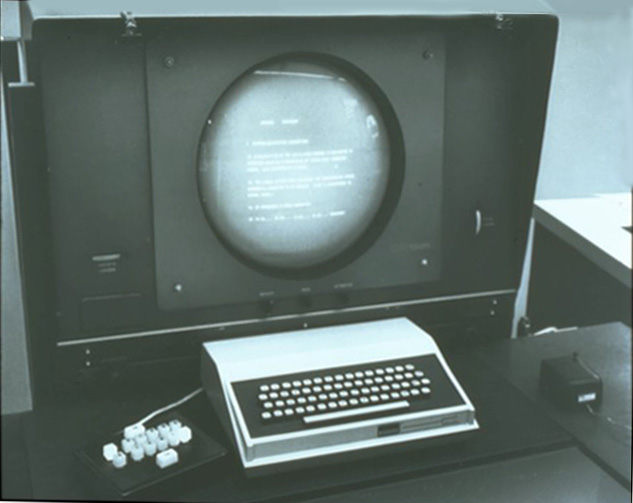
Sure, there is a component of “time-shared access” specifically in the commercial model of paying only for what is used. But the essence of its on-demand nature is the ability to create resources effectively from nothing. Where formerly you had to get a hold of an actual hardware box, wire it up, configure it – you now make a software request and your machine is up and running.

Hardware has become software – and the key is the interface. To borrow from the famous Clinton campaign motto: It’s the API, stupid!

By exposing its capabilities in a comprehensive yet easy-to-use interface, platforms such as Amazon’s AWS go vastly beyond simple “hosted virtual machines” and give full control to developers and their applications.

So we take no small amount of pride in the fact that the Voxeo CXP platform offers its own comprehensive API since 2005, when it was still known as VoiceObjects X5. Back then, before something like EC2 existed, the idea of exposing a platform’s full feature set in a well-documented interface that developers could use was pretty new. And it was driven by our deep conviction that the platform’s task is to serve the applications running on it – not the other way around.

Thus we enabled developers to monitor deployments, as well as to create new ones. To inspect and export applications and object definitions, as well as to import and modify newly developed ones. To adjust user management settings, as well as to add new users or entire tenant sets in multi-tenant environments. We refactored the platform on an “API first” basis, i.e. for each new feature the foremost question to ask was: How is it accessible in the interface?

While the Voxeo CXP API has been augmented over time to cover new platform capabilities, and has been expanded from its original SOAP flavor to also offer a REST version, is has been a staple ever since it first entered the product. And while over time we have added many other market-leading features, such as most recently Hotspot Analytics, there has never been the slightest doubt in our minds that the API was one of the most important platform capabilities we’ve built.

All the more so because we’ve also put our effort where our mouth is: Not only does the CXP Developer IDE use this API to communicate with the platform, it is also the key component used by our extensive Python-based testing framework that puts CXP Server through its paces every night, with every build. Automated testing that ensures the platform’s stability, performance, and reliability – and that is possible only because every single capability is accessible.

For our online documentation of the API, visit http://help.voxeo.com/go/vox/webservices. And as always, we encourage you to share your comments on Twitter – connect @voxeostefan !

E Pluribus Unum

Monday, March 19th, 2012

When in the course of large deployments, it becomes necessary for one installation to dissolve the bands which have connected it with another, a decent respect to the opinions of our customers and partners requires that we should declare the causes which impel us to the separation.

In other words: While small to medium-sized deployments can be handled very well using the standard VoiceObjects clustering approach, matters get more interesting when you scale up to multi-thousand port installations that often also span different geographical locations e.g. for disaster recovery purposes. Using a single big cluster is impractical in this case, yet deploying multiple disconnected clusters adds the encumbrance of multiple Control Centers with separate monitoring and management commands.
To address this challenge, VoiceObjects 11 introduced the concept of the virtual cluster, which combines multiple “real” clusters into a deployment that can be monitored and managed as a unit: Out of many clusters, comes one virtual cluster.

The virtual cluster combines the flexibility of small-scale individual installations with the comfort of integrated monitoring and management. Its component units are loosely coupled and therefore easily replaceable. At the same time, it presents a unified, aggregated view and management interface that can be accessed through the graphical Control Center as well as through the SOAP-based Web Service Interface for custom monitoring and scripting.
In this sense, the virtual cluster is a piece in VoiceObjects’ cloud strategy, more on which we will provide over time in a series of blog postings.

When building a virtual cluster, we hold a number of pre-requisites to be self-evident:

  • All clusters must use the same Metadata Repository
    An integrated view can only be provided if all VoiceObjects clusters use the same  Metadata Repository since only then do they operate on the same underlying objects.
  • All clusters must run the same Server object
    Within the same Metadata Repository, all VoiceObjects clusters involved must also reference the same Server object. This ensures that they run the same set of services.
  • Server instance IDs must be unique across the virtual cluster
    In order to prevent conflicts and to allow for unique addressing, each individual server instance must have an ID that is unique across the entire virtual cluster.

In addition, certain settings must be respected in order to ensure the correct management of application caches across the virtual cluster.

What brings the virtual cluster together is the Virtual Control Center (VCC). Its configuration is easy – simply provide the list of component clusters with their server instances, and VCC does all the work of detecting what is or is not running at any given moment, aggregating views into a merged representation, and replicating commands across the virtual cluster. VCC even allows you to change this configuration dynamically in case you need to augment your cluster, or to change individual server instances.

On the “front end”, VCC exposes the exact same interface as a regular server instance – so clients such as Desktop for Eclipse and Desktop for Web can readily connect. The same is true for the VoiceObjects Web Service Interface, which enables you to create your own monitoring and maintenance scripts.

You can find detailed information about Virtual Control Center, including all requirements and configuration choices, in Appendix C of the Deployment Guide (PDF).

If you have any comments or questions, feel free to reach out to me on Twitter at @voxeostefan!

Social CRM And Building Apps to Monitor Social Channels

Wednesday, March 30th, 2011

We would like to invite you to our next developer jam session scheduled for Thursday, April 07, 2011.

Two thirds of today’s Internet users actively engage with social networks such as Twitter or Facebook.
They use it mainly for personal communication, but often share feedback and thoughts about product or
service experiences. Companies need to contribute to this conversation to protect their brands, enhance
customer service or provide proactive customer care. They are or will soon be faced both with a staffing
problem and the technical challenge of having to integrate with their more traditional customer interaction channels.

Learn how Voxeo can help you automate communication over social channels and bridge the gap between social
networks and traditional channels such as IVR or direct agent interaction.

Register today for this session

Time: 8:00 AM US Pacific, 11:00 AM US Eastern, 5:00 PM Central European time

Title: Social CRM And Building Apps to Monitor Social Channels