Archive for April, 2013

“It’s the API, stupid!”

Monday, April 15th, 2013

In a recent discussion about “the cloud”, someone told me that he felt the topic was vastly overrated, and that what amounted to time-shared access to mainframes really was a revival of forty year-old concepts. The key thing that struck me about this was how completely it missed the point of a cloud architecture.
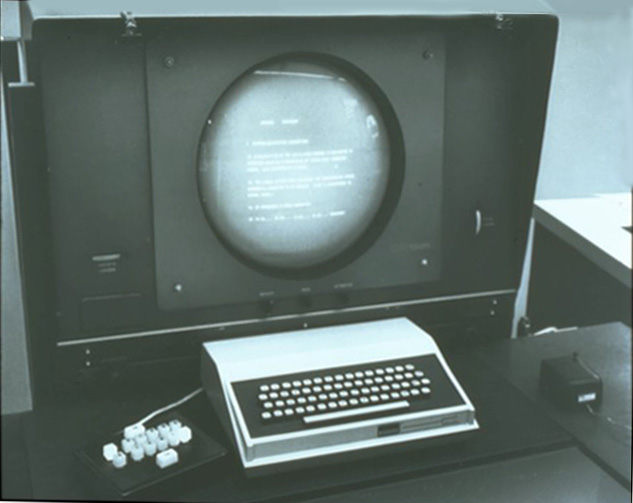
Sure, there is a component of “time-shared access” specifically in the commercial model of paying only for what is used. But the essence of its on-demand nature is the ability to create resources effectively from nothing. Where formerly you had to get a hold of an actual hardware box, wire it up, configure it – you now make a software request and your machine is up and running.

Hardware has become software – and the key is the interface. To borrow from the famous Clinton campaign motto: It’s the API, stupid!

By exposing its capabilities in a comprehensive yet easy-to-use interface, platforms such as Amazon’s AWS go vastly beyond simple “hosted virtual machines” and give full control to developers and their applications.

So we take no small amount of pride in the fact that the Voxeo CXP platform offers its own comprehensive API since 2005, when it was still known as VoiceObjects X5. Back then, before something like EC2 existed, the idea of exposing a platform’s full feature set in a well-documented interface that developers could use was pretty new. And it was driven by our deep conviction that the platform’s task is to serve the applications running on it – not the other way around.

Thus we enabled developers to monitor deployments, as well as to create new ones. To inspect and export applications and object definitions, as well as to import and modify newly developed ones. To adjust user management settings, as well as to add new users or entire tenant sets in multi-tenant environments. We refactored the platform on an “API first” basis, i.e. for each new feature the foremost question to ask was: How is it accessible in the interface?

While the Voxeo CXP API has been augmented over time to cover new platform capabilities, and has been expanded from its original SOAP flavor to also offer a REST version, is has been a staple ever since it first entered the product. And while over time we have added many other market-leading features, such as most recently Hotspot Analytics, there has never been the slightest doubt in our minds that the API was one of the most important platform capabilities we’ve built.

All the more so because we’ve also put our effort where our mouth is: Not only does the CXP Developer IDE use this API to communicate with the platform, it is also the key component used by our extensive Python-based testing framework that puts CXP Server through its paces every night, with every build. Automated testing that ensures the platform’s stability, performance, and reliability – and that is possible only because every single capability is accessible.

For our online documentation of the API, visit http://help.voxeo.com/go/vox/webservices. And as always, we encourage you to share your comments on Twitter – connect @voxeostefan !

Agile bug tracking with Skype

Monday, April 1st, 2013

Typically, our blog posts deal with new features in our CXP product, or with best practices in how to build applications on the platform. This time, however, we want to open the kimono a little and share some development process best practices that enable us to deliver releases independent experts call the “most significant technological advancement within the enterprise communications industry“.

Being a truly international company with offices on multiple continents and distributed development teams, we use online communication tools a lot to stay in touch by chat, voice calls, or video conferences – tools such as Skype. And still it took some creative thinking outside the box to leverage Skype for an altogether different use case – creative thinking that as “passionate problem solving” is one of our core corporate values.

Everybody who has worked in professional software development knows that one of the most crucial pieces of infrastructure is a good bug tracking system. To stay on top of issues, and to ensure their timely resolution, key requirements are:

  • easy access for everybody involved in the development process;
  • good prioritization to focus on the important and/or urgent;
  • convenient search functionality to find existing entries;
  • good handling of supplemental resources (log files, screenshots, etc.);
  • notifications alerting relevant parties of ticket updates.

It was a true “Eureka!” moment when we realized that to get all of this we didn’t need yet another additional system – we could get it, and much more, from the Skype chats we were already using to ensure unlocked communication!

So how do we do it?
All of our developers, testers, and other relevant or interested parties (e.g. Product Management) are in a shared Bug Tracking chat. Any issue that is found is posted to this chat, and its unique time stamp serves as “ticket” identifier. Supplemental resources such as log packages, screenshots, etc. can also easily be posted and shared in the chat and are available to everybody else.
Interactions are automatically persisted in the chat history, and can be consulted again at any later time by straightforward searches. Replication of the information to each client, DNS-like, comes for free!

Notifications on any new entry or update are automatic, and even configurable in the Skype client – including filter settings that let developers target issues in specific product components they’re responsible for through appropriate key words. A great functionality that is hard to find in other bug tracking systems, and that has given us a measurable efficiency boost.

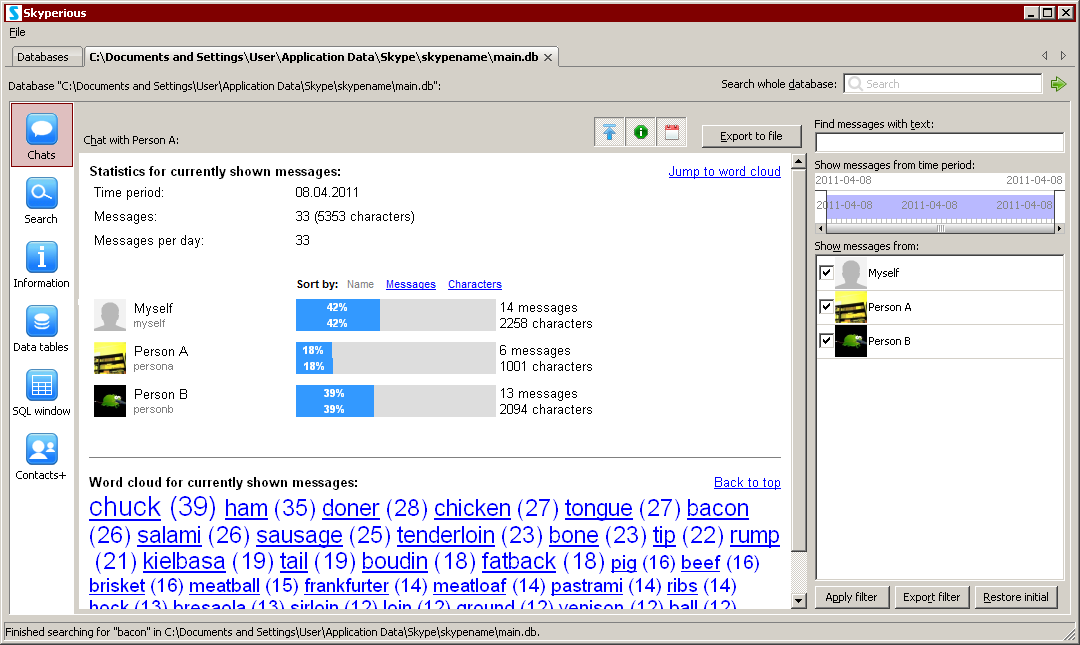
In addition to the regular Skype clients, many of us also use additional tools such as Skyperious that provide even more fine-grained control and advanced search functionality. It also powers the unique way we do “ticket” prioritization – by word cloud!

Instead of having somebody with potentially limited insight into the issue arbitrarily assign some priority, this method ensures that priority emerges naturally, in a “wisdom of crowds” manner, from the work that those who know what they are doing perform on the issues. It has sharpened and aligned our priorities in ways we had not formerly considered possible.

We have been using this approach for about 7 months now, and the results we’ve had are nothing short of amazing. It matches our high-powered agile development methodology perfectly, drives extremely effective sprints, and empowered us to do things for our upcoming CXP 13 release that simply would not have been possible with any legacy bug tracking solution. (To learn more, join Tobias Goebel’s webinar on April 9.)

That one flash of insight has opened the door to a better way of engineering, and we’ve never looked back!

We hope this bit of behind-the-scenes insight has been of interest to you, and perhaps even provided some inspiration for how to optimize your own processes. Let us know what you think on Twitter @voxeostefan – we’d love to hear your success stories!